Adirondack Chair Cushions - The History Behind The Iconic Chair
Adirondack Chairs are an All American Classic
Adirondack chairs are an American outdoor classic—and the easiest way to make yours more comfortable
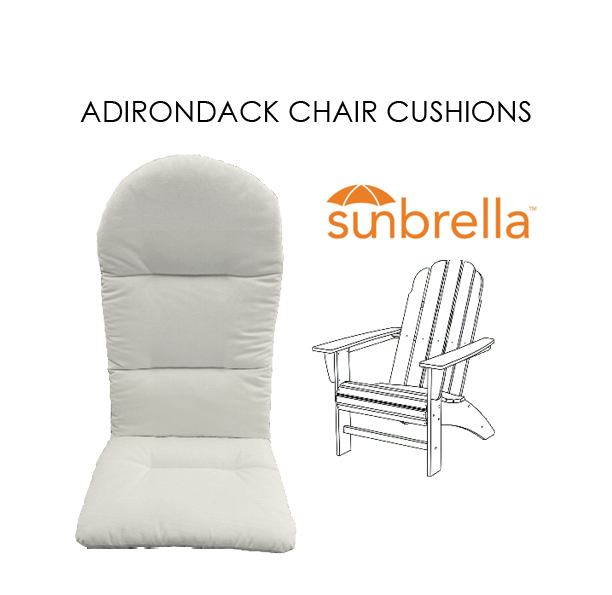
(and more stylish) is with the right cushion.At Cascadia Outdoor Cushions, we create custom Adirondack chair cushions made to order
in hundreds of premium outdoor fabrics, including Sunbrella®, Outdura®, Revolution®, Solarium®, and Premier Prints®.
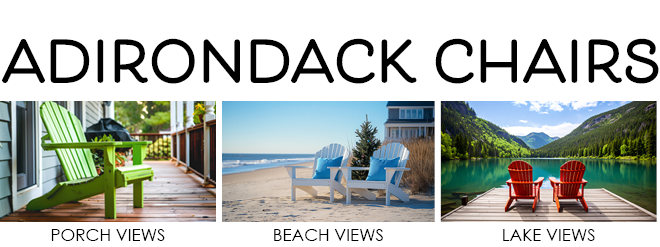
Whether you’re outfitting a lakeside dock, a front porch, or a modern backyard retreat, our cushions add support, softness,
and a finished designer lookwithout settling for “one-size-fits-none” big-box options. '
Use this page as your complete Adirondack resource: learn the story behind the chair,
explore popular Adirondack styles and materials,
and shop Adirondack Chair cushions by fabric brand to build the outdoor space you really want.

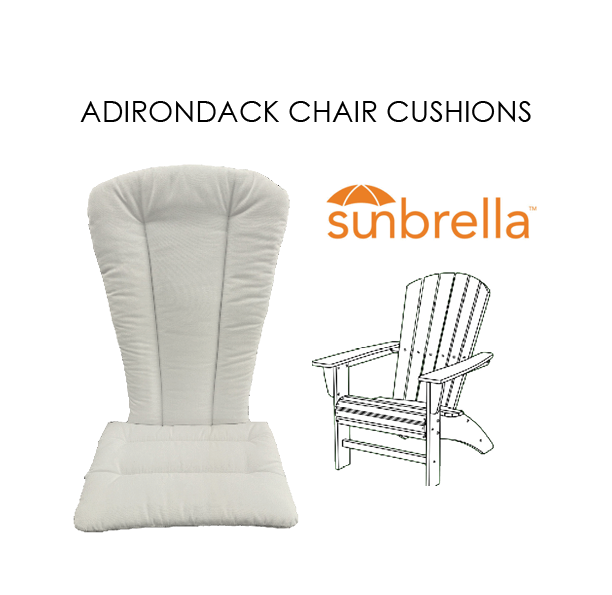
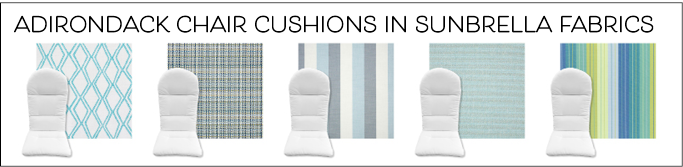
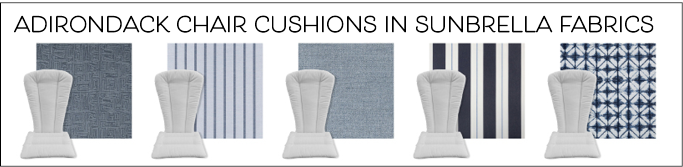
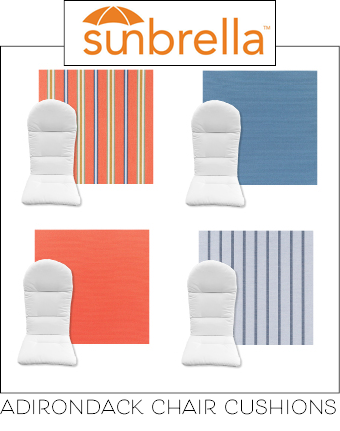
Order Adirondack Chair Cushions in Sunbrella Outdoor Fabrics
Common Adirondack Chair Frame Materials
Wood (cedar, pine, eucalyptus, teak, acacia, etc.)
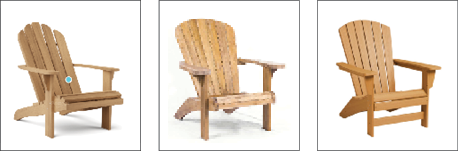
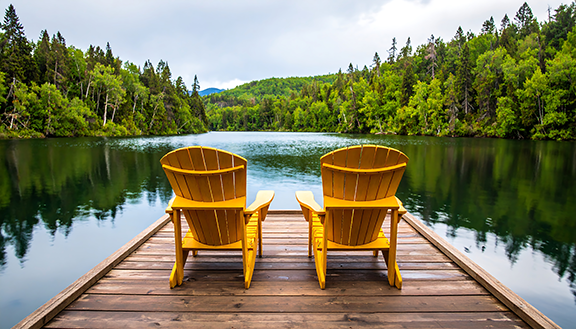
Wood Adirondack chairs have that classic, warm, natural feel that just belongs on a porch, a dock, or beside a firepit.
The grain, the color, even the little imperfections are part of the charm, and over time the chair can take on
a lived-in look that feels relaxed and timeless.
The tradeoff is that wood needs a little care to keep it looking its best.
Depending on the species and the finish, you may want to seal it, stain it, or simply let it weather to a soft gray patina.
In full sun, the seat and arms can also get surprisingly hot, and as the chair ages, you might notice a bit of roughness or splintering,
especially along the edges where you sit and where your arms rest.
That’s exactly where a cushion becomes a smart upgrade. A good Adirondack cushion adds instant softness,
takes the pressure off the seat edge, and makes longer lounging way more comfortable.
It also helps protect the chair’s finish by reducing friction and wear in the spots that get the most contact,
keeping your wood chair looking better for longer.
Order Adirondack Chair Cushions in Sunbrella Outdoor Fabrics
HDPE / “poly lumber” (recycled plastic lumber)
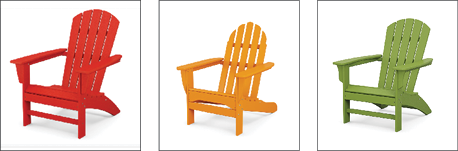
HDPE, often called “poly lumber,” is a popular choice for Adirondack chairs because it delivers that sturdy, modern-classic look
without the upkeep that comes with wood. It’s made from durable recycled plastic lumber, so you get a chair that feels substantial,
holds its shape, and is designed to live outdoors season after season with minimal fuss. For many patios and porches,
poly furniture is a premium upgrade because it’s built for real life—sun, rain, humidity, and everyday usewithout constant sealing or staining.
Brands in this space also emphasize toughness. Trex Outdoor Furniture, for example, notes that its Adirondack frames are made with
POLYWOOD lumber and built for demanding outdoor conditions, which helps explain why this material has become
such a go-to for long-term outdoor seating. Even with all that built-in comfort, a cushion is still a great finishing touch.
Poly chairs can feel a little cool in the early morning or late-season evenings, and they can warm up when they sit in direct sun.
Adding a cushion helps buffer those temperature swings, making the chair more pleasant to sit in across more of the day and more of the year,
plus it adds an easy layer of style.
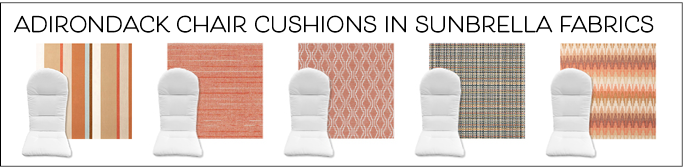
Custom Made To Order Adirondack Chair Cushions Sunbrella Outdoor Fabrics
Resin injection-molded plastic
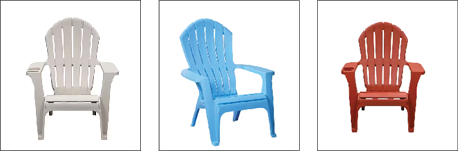
Resin or injection-molded plastic Adirondack chairs are a popular pick when you want the Adirondack look without spending a lot,
and they’re especially handy when you need seating that’s easy to move around. They’re lightweight, simple to hose off, and they work well
for casual spaces like a pool deck, a rental property, or a backyard where chairs get shifted often for guests.
The tradeoff is that this material usually doesn’t have the same “heirloom” feel as wood or premium poly lumber.
Over time, many plastic chairs can fade in strong sun, and some may flex a bit when you sit down, especially in cheaper versions
or after a few seasons of weather. That doesn’t mean they can’t be enjoyableit just means they’re more about convenience than longevity
and craftsmanship. This is where a cushion makes a huge difference.
Adding an Adirondack chair cushion instantly makes the seat feel softer and more supportive, especially on longer sits.
It also gives the chair a more finished, pulled-together look, turning a basic chair into something that feels intentional and inviting.
Visually, it’s one of the biggest upgrades you can make for the smallest effort—new color, new pattern, more comfort,
and a space that looks styled instead of simply furnished.
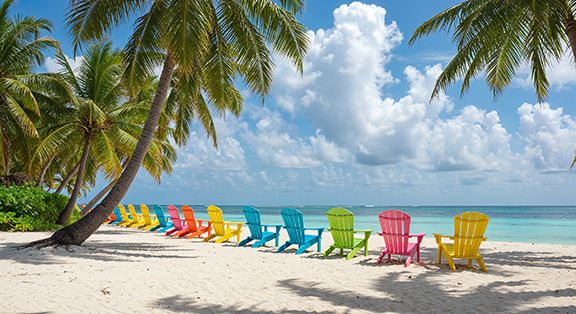
Add some color and comfort with Adirondack Chair Cushions Sunbrella Outdoor Fabrics
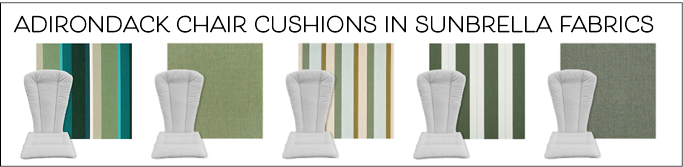
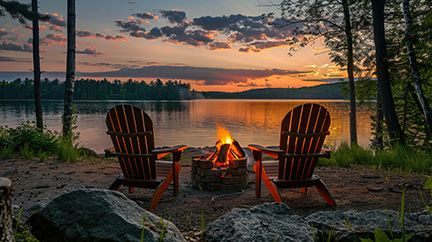
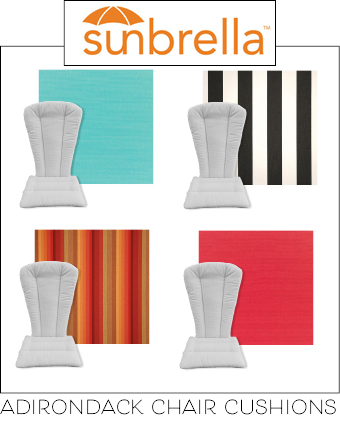
WHAT BRAND OF ADIRONDACK CHAIR IS THE BEST?
Adirondack chair prices are all over the map, and there’s usually a simple reason: not all Adirondack chairs are built the same.
When a chair is priced suspiciously low, it’s often because the manufacturer’s main goal is to ship the cheapest, lightest-weight product possible.
That typically means thinner material, weaker joints, and hardware that won’t hold up after a couple of seasons outdoors.
A good Adirondack chair should feel solid, not flimsy, and you can figure that out fast with a quick “sit and wiggle” test.
Sit down, lean back, shift your weight, and see if the chair flexes, creaks, or feels loose.
Then take a closer look at the bolts and fasteners—are they sturdy and well-fitted, or do they look small, soft, or already ready to rust?
Compare the thickness of the wood or poly lumber too; thicker boards generally mean better support and longer life.
Even picking up the chair can tell you a lot. A quality chair usually has some real weight to it, because it’s
made from more substantial material and better construction—not the bare minimum needed to get it into a box.
And don’t skip the most important question: Where was it made? Buying locally is one of the best ways to get better quality and better service.
Many independent patio stores and local farm stores carry Adirondack furniture that’s built to last, and supporting them keeps your community strong.
Then, once you’ve chosen a chair worth owning, finish it right—buy your
Adirondack cushions from Cascadia for comfort, style, and custom fabric choices that turn a good chair into your favorite seat.
| Construction Element | Why It Matters | Common Options | Best Practices / What to Look For | Red Flags |
|---|---|---|---|---|
| Overall Geometry (Seat + Back Angle) | Defines comfort. Adirondacks should “cradle” you without dumping you backward. | Classic recline; upright “conversation” Adirondack; oversized/“king” styles. | Look for a supportive back angle and a seat slope that feels relaxed but still easy to get out of. Test sit if possible. | Seat too steep (you slide), back too reclined (hard to stand), sharp seat-front edge. |
| Seat Slats / Seat Surface | Affects pressure points, drainage, and long-sit comfort. | Wide boards; narrow slats; contoured seat; one-piece molded seat (resin). | Even spacing for drainage, smooth edges, and a seat that doesn’t “bite” behind your knees. Slight contour is a plus. | Rough edges/splinters, uneven slat spacing, flimsy flex, sharp corners. |
| Back Design (Slats / Fan / Solid) | Controls upper-back support and overall style. | Straight slat back; fan back; curved/ergonomic back; mixed materials. | Even slat spacing, sturdy attachment at top and bottom, and no wobble when leaning back. | Loose back slats, rattling fasteners, large gaps that feel “pokey.” |
| Arms (Width, Height, Strength) | Adirondack arms double as a “table” for drinks/books and help you stand up. | Standard; extra-wide; curved; cup-holder add-ons. | Wide enough to be useful, solid attachment to frame, smooth arm edges. Arms should not flex much under pressure. | Wobbly arms, weak brackets, sharp arm edges, screw heads catching skin/clothing. |
| Front Edge (Seat Lip) | Major comfort point—this edge can press into legs. | Square edge; rounded edge; waterfall/rolled edge (premium); cushioned edge via seat pad. | Rounded or softened front edge is best. A cushion makes a big difference here. | Hard, sharp seat lip; splintering; cracked resin edge. |
| Joinery & Fasteners | Determines strength, longevity, and whether the chair loosens over time. | Stainless hardware; coated steel; bolts + nuts; screws; hidden fasteners. | Prefer stainless or high-quality coated hardware for outdoor use. Bolted joints often stay tighter than screws alone. | Rusting screws, stripped heads, hardware that backs out, wobble at arm or back joints. |
| Frame & Load Paths | The hidden “skeleton” that keeps the chair solid and safe. | Side-panel frames; leg-brace frames; molded one-piece shells. | Look for thick, rigid side rails and good bracing under the seat. The chair should feel planted with no twist. | Racking/twisting when you sit, uneven legs, visible cracks at stress points. |
| Legs & Feet (Ground Contact) | Affects stability on decks, grass, gravel, and docks. | Straight feet; wide feet; glides/caps; adjustable feet (some metal frames). | Wide, flat feet help prevent sinking into soft ground. Protective glides are great for decks. | Uneven wobble, cracking at foot corners, missing caps, sharp edges scratching decking. |
| Drainage & Drying | Outdoor chairs should shed water and dry quickly to avoid rot/mildew. | Slatted seats/backs; solid molded seats with drain channels; breathable cushions. | Slats and gaps help water drain. If you add cushions, choose outdoor fabrics and quick-dry fills. | No drainage points, standing water pockets, cushions that stay wet for days. |
| Finish & UV Protection | Sun is brutal—finish quality determines fading, cracking, and surface comfort. | Paint; stain/sealer; natural weathering; powder coat (metal); UV-stabilized resin/poly. | Choose finishes rated for outdoor UV exposure. Maintain wood finishes periodically; keep metal coatings intact. | Peeling paint, chalking, flaking powder coat, brittle resin, rough weathered wood without sanding. |
| Foldability & Hardware (If Folding) | Convenient for storage, but introduces stress points. | Folding wood; folding poly; folding resin; hinged designs. | Look for robust hinges and locking positions that feel secure. Check for pinch points. | Loose hinges, wobble when open, pinching, cracks around hinge screws. |
| Sizing & Ergonomics | Not all Adirondacks fit all bodies—width and seat height matter. | Standard; oversized/“king”; tall-seat variants; kids’ sizes. | Confirm seat width, seat height, and back height. Oversized chairs are great for lounging; standard works for smaller spaces. | Seat too low for comfort, arms too high/low, narrow seat squeezing hips/shoulders. |
| Materials Snapshot (Quick Guide) | Material drives maintenance, feel, and lifespan. | Wood: classic & warm HDPE/Poly: low maintenance & premium Resin: lightweight & budget Metal: modern & mixed-material styles | Wood: seal/stain or let weather; sand edges if needed HDPE/Poly: wash and go; check fasteners yearly Resin: shade when possible; avoid extreme flex loads Metal: protect coatings; watch for rust on steel | Wood: splinters/rot if neglected HDPE/Poly: lower-grade hardware loosening Resin: fading/cracking over time Metal: chipped coating, corrosion (steel) |
| Why Cushions Matter (Any Material) | Comfort + style upgrade that also reduces wear in contact areas. | Seat-only pads; seat + back sets; tie-on styles; non-slip backing options. | Outdoor-rated fabric, quality stitching, secure ties, and quick-dry fills. A cushion also helps with “hot seat/cold seat” swings. | Indoor foam, weak seams, no ties, fabrics that fade quickly or hold moisture. |
The following information is copied from www.adirondack.net
Thomas Lee & the Westport Chair
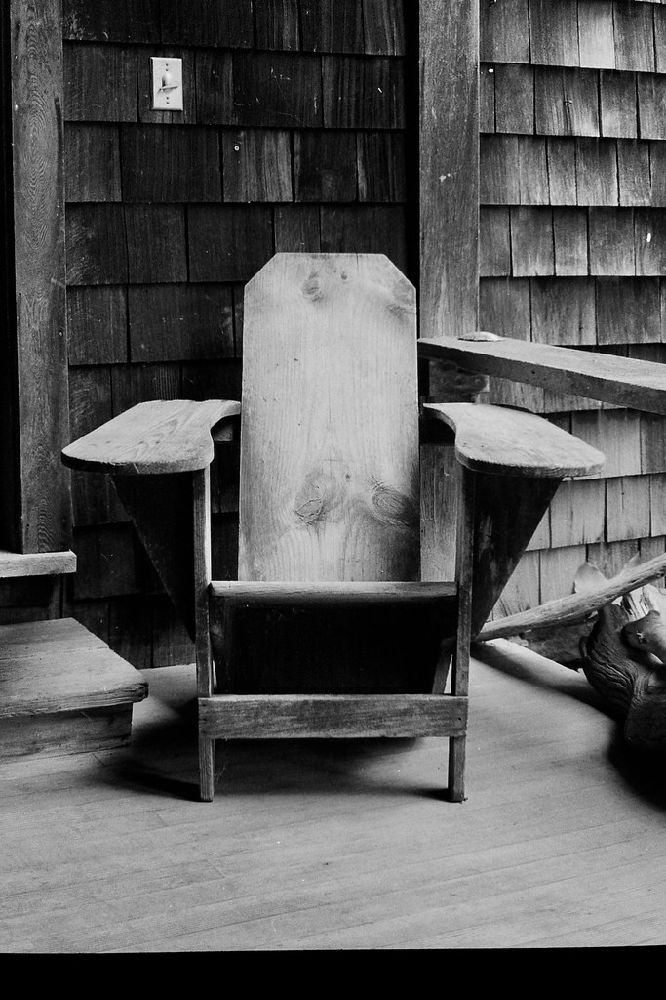
The history of the Adirondack chair begins in the Town of Westport, NY with the inventor of the Westport chair - Massachusetts native Thomas Lee.
Lee's family owned a house in Westport, and he spent many of his summers there around the early 20th century.
In an interview between the Sun Community News and Thomas Lee's great-great nephew, it was revealed that Lee came from a wealthy family,
was a Harvard graduate, but then dropped out of law school because he preferred to work in nature and felt at home in the Adirondacks.
As the story goes, during one summer in Westport, Lee felt a desire to create a chair that could handle the rugged terrain of the Adirondacks.
This chair would have to be sturdy, balanced, and comfortable on everything from sandy ground to a small hill.
From 1900-1903, Lee worked on making this new chair. In order to perfect it, he had his family members test out each prototype
before moving on to the next. Eventually, Lee came up with what he considered the perfect chair: wide armrests, a high back, and a slanted seat
(the seat and back were made from single pieces of wood).
To read more details about the origins of the Adirondack Chair
and its inventor, click the link below
Learn About the History of the Iconic Adirondack Chair
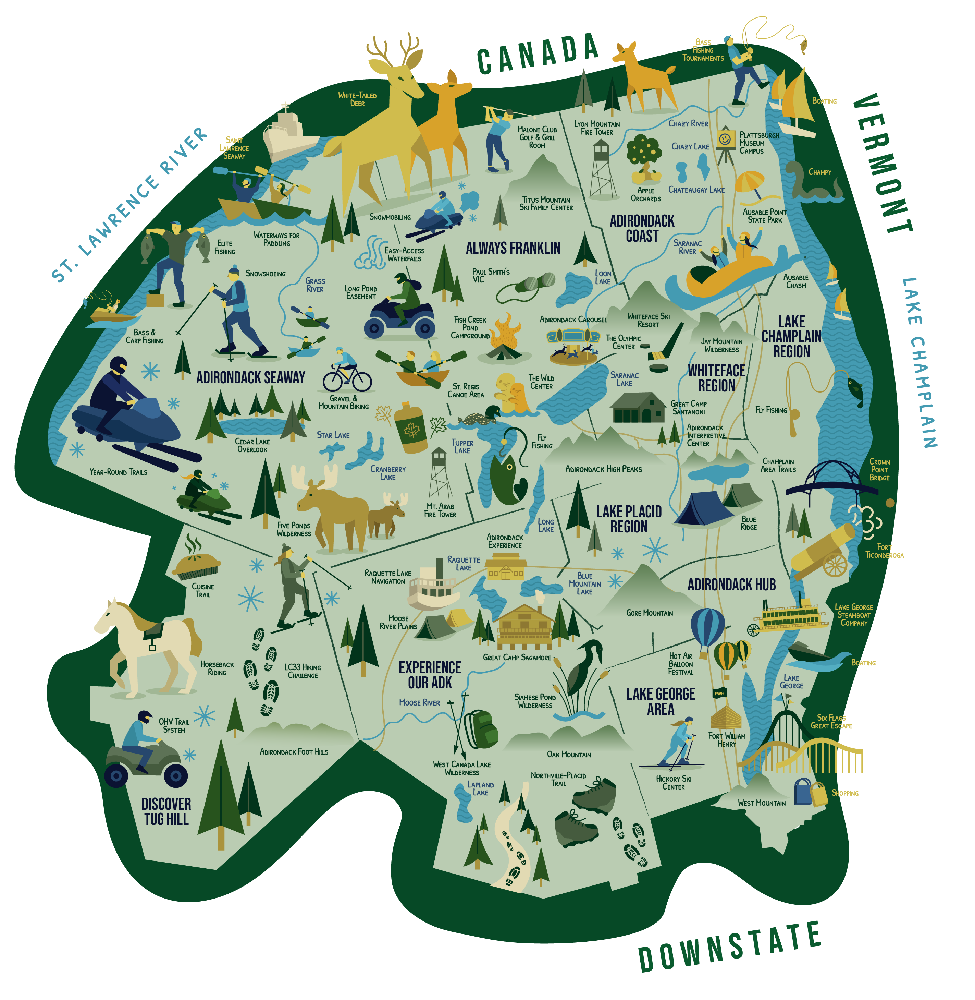
THE FOLLOWING INFORMATION IS COPIED DIRECTLY FROM WIKIPEDIA FOR YOUR READING ENJOYMENT
To read the entire article on Wikipedia, Click the link below
Adirondack Mountains - Wikipedia
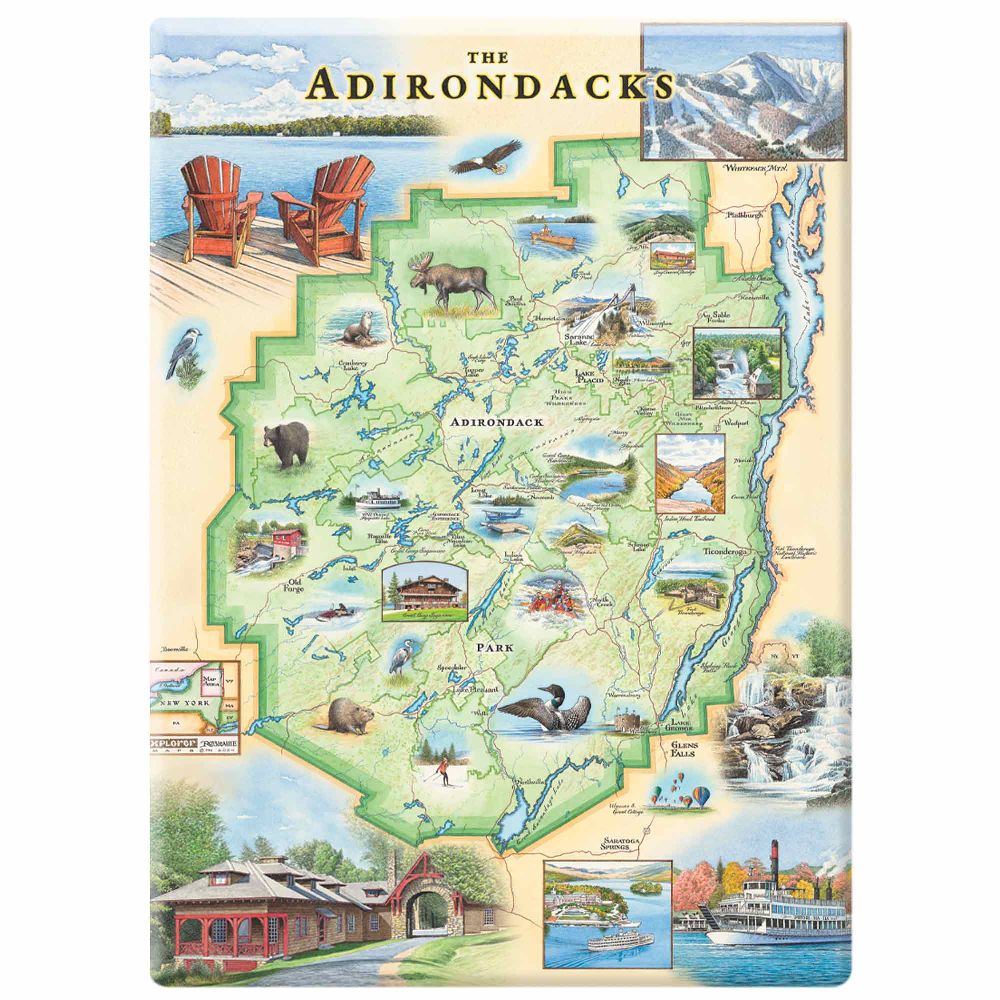
The Adirondack Mountains (/ˌædɪˈrɒn.dæk/ AD-i-RON-dak)[1][2] are a massif of mountains in Northeastern New York
which form a circular dome approximately 160 miles (260 km) wide and covering about 5,000 square miles (13,000 km2).[3]
The region contains more than 100 peaks, including Mount Marcy, which is the highest point in New York at 5,344 feet (1,629 m).
The Adirondack High Peaks, a traditional list of 46 peaks over 4,000 feet (1,200 m), are popular hiking destinations.
There are over 200 named lakes with the number of smaller lakes, ponds, and other bodies of water reaching over 3,000.
Among the named lakes around the mountains are Lake George, Lake Placid, and Lake Tear of the Clouds.
The region has over 1,200 miles (1,900 km) of rivers.[4]
Order Adirondack Chair Cushions in Sunbrella Outdoor Fabrics